I don't typically write posts just to rant or complain... there's usually some kind of important issue if I do that influences patient care or the overall status of our profession. However, the last month or so has provided me with a list of pet peeves that seem to be growing and growing like tumor in my brain. I hope I don't "bring you down" or "send off bad vibes" with this post as my Step-Father's circa 1969 vocabulary (still in use) might suggest, and please feel free to reply with your own pet peeves... it can be quite therapeutic to vent these things, and you never know... we may be able to come up with some solutions to these issues together.
Pet Peeve #5 - Patients wanting to know your opinion about their x-rays:
I'm not talking about patients who are unaware that it is illegal for you to give your opinion. I'm talking about the ones who, after you explain that you cannot give your opinion because you are not a Physician and you could lose your license for doing so, persist saying things like "come on... I know that you know what you're looking at!" Simply wanting a quick result of an x-ray isn't enough to call it a pet peeve... it's the pursuit of your opinion beyond explanation of legality that drives me batty. I have had patients argue with me for 10-15 minutes (until a transporter arrives sometimes) about not being able to tell them their results... the best defense for me so far has been "I just make the x-rays look good, and the Doctor gets to read them" or "would you rather have my 2-year education diagnose you or the Doctor's 12-year education diagnose you?" Are you willing to risk your license and career to provide your opinion when a Physician will read the x-rays just a few minutes from the time of the exam? I, personally, am not.
Pet Peeve #4 - The Complacent Technologist:
As a working Technologist (prior to any supervisory level experience), I have dealt with this a few ways. Early in my career, I would simply ignore these Techs and work my rear end off, not worrying about the workload of those around me. I kind of miss these days because I was getting paid to perform one patient exam at a time, and I didn't have to multi-task very much for the good of the department. I knew that if I kept a good work ethic, I would find myself getting optimum raises and increased opportunities at work regardless of what other Techs were doing. I quickly became known as "good with patients, dependable and hard-working"... a Supervisor's ideal employee.
Now that I am involved in leadership, I have a LOT more responsibility for the overall productivity of the department. Techs who go missing or take extra long breaks or lunches really take a toll on the department. A Technologist who just wants to collect his/her paycheck, barely performing the duties within their job description, but never going above and beyond should not (in my humble opinion) be in the medical field. When you are taking care of real people, leave your complacency at home folks! Even if you work at a slower pace than your peers, you can have a huge impact on patient satisfaction of you enjoy your job, which all dwindles down to taking care of people. I would rather hire someone who is lacking in some technical skills or efficiency, but who has a good attitude and strong work ethic, than someone who seems complacent. Skills can be taught, but attitude cannot.
Pet Peeve #3 - Disrespectful Nurses:
I will start by saying that I have a huge respect for the work that Nurses do... in many ways, I feel that Nurses are tasked with caring for the patient, while the Physician researches what to do for the patient. They are the front line between the patient and their Physician, and often do not get cooperation from Physicians, leaving them in an awkward role.
What I cannot tolerate is Nurses who are disrespectful to their patients and/or other staff members throughout the hospital. I do not hesitate to write up any Nurse who neglects a patient (example: not changing soiled bed sheets for 4 hours). I have been in the hospital with my kids too many times... the notion that we may get one of these "bad apples" as a Nurse for one of my children worries me. I guess I have a personal bias for unprofessional conduct.
I recently had a conversation with a Nurse who felt competent to hire Radiologic Technologists because she was an "IR Nurse" 20 years ago. I found this extremely insulting. I said "well I was an IR Technologist about 7 years ago... do you think I am competent to hire a Nurse?" In her eyes, being a Nurse required far more education and expertise than "pushing a button" did, and of course I wasn't competent to hire any Nurse. All I'm asking for is a little bit of respect... some acknowledgement that I went through the same amount of specialized education than Nurses do, with (for the most part) an entirely different skill set at the end. I don't ever claim that Nursing is "just hanging out with patients all day." Mutual respect will go a long way in bridging a gap between departments as well as obtaining what should be our mutual goal of outstanding care for the patient.
Pet Peeve #2 - JCAHO Inspection
For those of you that don't know, JCAHO is an accrediting body for the hospitals which, once accreditation is received, provides a certain level of benefits including reimbursement for costs among other things. Bottom line... if accreditation is lost due to a failed inspection, the hospital loses a lot of money - and it could mean many jobs, and in this economy, maybe even a near-future shut down of the hospital as a potential result.
It's not the inspection itself that bothers me, it's the attitude of hospital employees when they are made aware that JCAHO may be visiting. People go into panic mode as if a tornado siren went off. Frantic orders are placed upon employees to make sure everyone is doing everything by the book, supplies and drugs aren't expired, the best patient care is observed, work orders are properly placed for damaged equipment, cabinets are locked that should be locked, HIPAA is observed, and break times are logged... among many things I haven't mentioned.
The irony lies in that patient care is often impaired because attention is being focused so intently on all of these things. I believe that it is good practice to run a mental checklist to make sure all of these things are being done properly, but not that anyone should be really stressed out about them. All of these things should be done every day anyways, right? I propose that the amount of panic, fear, and stress load is proportional to the belief that your hospital is not doing the things it should according to accreditation standards. The more you think you're not doing things they way they are supposed to be done, the more your staff will stress out about a JCAHO inspection.
Pet Peeve #1 - Physicians not Explaining Exams
Part one of this pet peeve is failure of the Physician to explain the reason for the exam... this is difficult on two levels. First, the patient may have no idea why the Physician ordered an exam. This requires a large amount of time to determine through patient history and even possibly a phone call to the Physician to get a little bit more history on what he/she is looking for. Second, the hospital will not get reimbursed for the procedure if there is not an accurate reason (stated on the prescription) for the exam. The correct ICD-9 (soon to be ICD-10) code will not be provided, and the hospital has to suck up the cost of the exam. Not a great way to go about billing with all of the health care reform and cuts in medicare reimbursement going on!
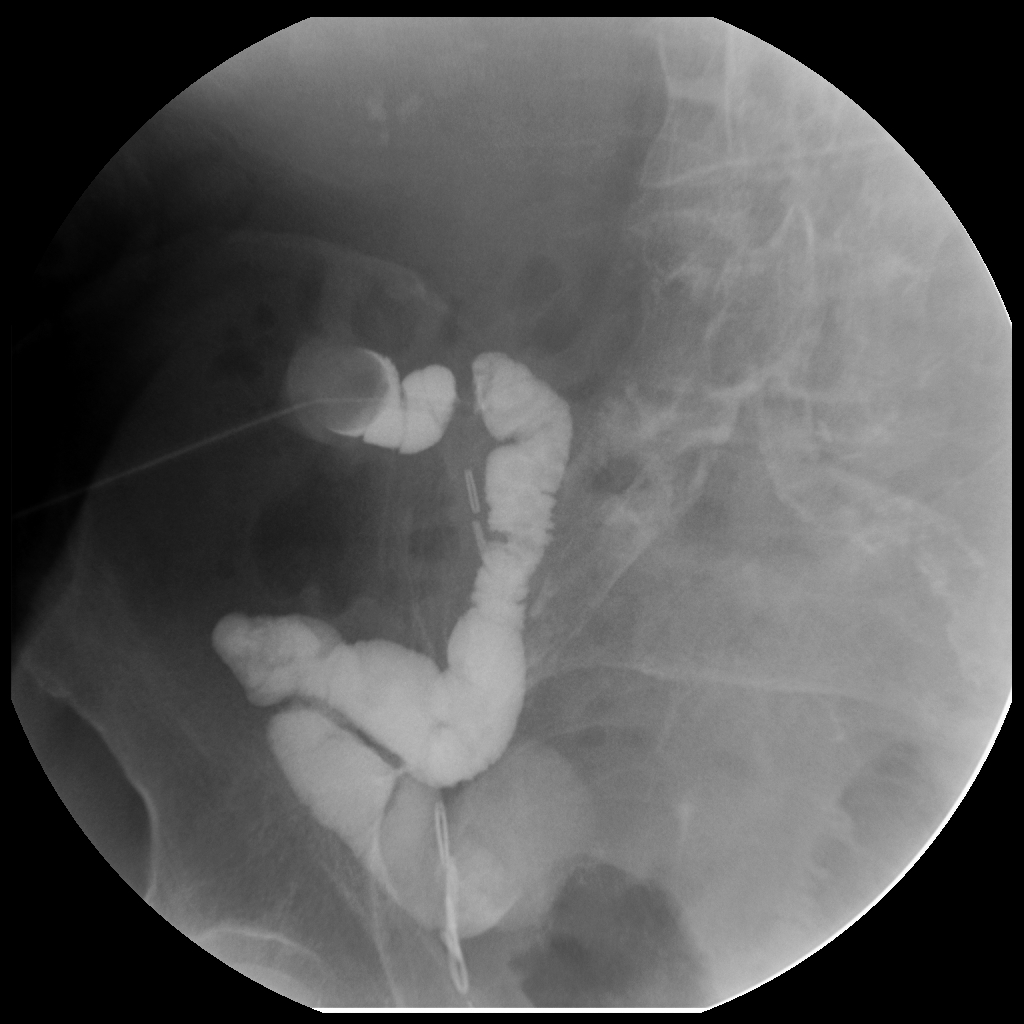
Part two deals with when a Physician orders an exam for a patient (a Barium Enema for example) and tells the patient they're "going for an x-ray." First of all, patients hear this and think "my last x-ray was a chest x-ray, and that took about 10 minutes." They may not make arrangements to be in your department for over an hour or expect the potential discomfort and recovery needed for some of the exams we perform. The definitely don't expect the "upside-down volcano" that a bowel prep can cause, or any tampering with their rectum in the radiology department! Half the time, they end up refusing the exam, or if they proceed, they get upset because they had an unpleasant and unexpected experience provided by you, the Technologist. Two months down the road, negative comments come up on patient satisfaction surveys, and if the patient complains to the original ordering Physician about the procedure, that Physician may cause a stink over it at the administrative level (which eventually trickles down to the Techs) or the Physician may stop sending business to your hospital with enough complaints, unaware that they are part of the problem.
Doctors, you spent a large percentage of your life-time in school to help patients... you can start by speaking to them. We want to help too!
To summarize, I think a majority of these personal pet peeves can be solved with the golden rule of simply treating people how you want to be treated. And again, I do not intent to spew negativity, but as workloads increase with the cutting of costs and even work-force, we are all going to be a little more stressed in the next few years, and may be in the need of an outlet. What are some of your pet peeves in your radiology department?
FQC6QMCKV6S6
Pet Peeve #5 - Patients wanting to know your opinion about their x-rays:
I'm not talking about patients who are unaware that it is illegal for you to give your opinion. I'm talking about the ones who, after you explain that you cannot give your opinion because you are not a Physician and you could lose your license for doing so, persist saying things like "come on... I know that you know what you're looking at!" Simply wanting a quick result of an x-ray isn't enough to call it a pet peeve... it's the pursuit of your opinion beyond explanation of legality that drives me batty. I have had patients argue with me for 10-15 minutes (until a transporter arrives sometimes) about not being able to tell them their results... the best defense for me so far has been "I just make the x-rays look good, and the Doctor gets to read them" or "would you rather have my 2-year education diagnose you or the Doctor's 12-year education diagnose you?" Are you willing to risk your license and career to provide your opinion when a Physician will read the x-rays just a few minutes from the time of the exam? I, personally, am not.
Pet Peeve #4 - The Complacent Technologist:
As a working Technologist (prior to any supervisory level experience), I have dealt with this a few ways. Early in my career, I would simply ignore these Techs and work my rear end off, not worrying about the workload of those around me. I kind of miss these days because I was getting paid to perform one patient exam at a time, and I didn't have to multi-task very much for the good of the department. I knew that if I kept a good work ethic, I would find myself getting optimum raises and increased opportunities at work regardless of what other Techs were doing. I quickly became known as "good with patients, dependable and hard-working"... a Supervisor's ideal employee.
Now that I am involved in leadership, I have a LOT more responsibility for the overall productivity of the department. Techs who go missing or take extra long breaks or lunches really take a toll on the department. A Technologist who just wants to collect his/her paycheck, barely performing the duties within their job description, but never going above and beyond should not (in my humble opinion) be in the medical field. When you are taking care of real people, leave your complacency at home folks! Even if you work at a slower pace than your peers, you can have a huge impact on patient satisfaction of you enjoy your job, which all dwindles down to taking care of people. I would rather hire someone who is lacking in some technical skills or efficiency, but who has a good attitude and strong work ethic, than someone who seems complacent. Skills can be taught, but attitude cannot.
Pet Peeve #3 - Disrespectful Nurses:
I will start by saying that I have a huge respect for the work that Nurses do... in many ways, I feel that Nurses are tasked with caring for the patient, while the Physician researches what to do for the patient. They are the front line between the patient and their Physician, and often do not get cooperation from Physicians, leaving them in an awkward role.
What I cannot tolerate is Nurses who are disrespectful to their patients and/or other staff members throughout the hospital. I do not hesitate to write up any Nurse who neglects a patient (example: not changing soiled bed sheets for 4 hours). I have been in the hospital with my kids too many times... the notion that we may get one of these "bad apples" as a Nurse for one of my children worries me. I guess I have a personal bias for unprofessional conduct.
I recently had a conversation with a Nurse who felt competent to hire Radiologic Technologists because she was an "IR Nurse" 20 years ago. I found this extremely insulting. I said "well I was an IR Technologist about 7 years ago... do you think I am competent to hire a Nurse?" In her eyes, being a Nurse required far more education and expertise than "pushing a button" did, and of course I wasn't competent to hire any Nurse. All I'm asking for is a little bit of respect... some acknowledgement that I went through the same amount of specialized education than Nurses do, with (for the most part) an entirely different skill set at the end. I don't ever claim that Nursing is "just hanging out with patients all day." Mutual respect will go a long way in bridging a gap between departments as well as obtaining what should be our mutual goal of outstanding care for the patient.
Pet Peeve #2 - JCAHO Inspection
For those of you that don't know, JCAHO is an accrediting body for the hospitals which, once accreditation is received, provides a certain level of benefits including reimbursement for costs among other things. Bottom line... if accreditation is lost due to a failed inspection, the hospital loses a lot of money - and it could mean many jobs, and in this economy, maybe even a near-future shut down of the hospital as a potential result.
It's not the inspection itself that bothers me, it's the attitude of hospital employees when they are made aware that JCAHO may be visiting. People go into panic mode as if a tornado siren went off. Frantic orders are placed upon employees to make sure everyone is doing everything by the book, supplies and drugs aren't expired, the best patient care is observed, work orders are properly placed for damaged equipment, cabinets are locked that should be locked, HIPAA is observed, and break times are logged... among many things I haven't mentioned.
The irony lies in that patient care is often impaired because attention is being focused so intently on all of these things. I believe that it is good practice to run a mental checklist to make sure all of these things are being done properly, but not that anyone should be really stressed out about them. All of these things should be done every day anyways, right? I propose that the amount of panic, fear, and stress load is proportional to the belief that your hospital is not doing the things it should according to accreditation standards. The more you think you're not doing things they way they are supposed to be done, the more your staff will stress out about a JCAHO inspection.
Pet Peeve #1 - Physicians not Explaining Exams
Part one of this pet peeve is failure of the Physician to explain the reason for the exam... this is difficult on two levels. First, the patient may have no idea why the Physician ordered an exam. This requires a large amount of time to determine through patient history and even possibly a phone call to the Physician to get a little bit more history on what he/she is looking for. Second, the hospital will not get reimbursed for the procedure if there is not an accurate reason (stated on the prescription) for the exam. The correct ICD-9 (soon to be ICD-10) code will not be provided, and the hospital has to suck up the cost of the exam. Not a great way to go about billing with all of the health care reform and cuts in medicare reimbursement going on!
Part two deals with when a Physician orders an exam for a patient (a Barium Enema for example) and tells the patient they're "going for an x-ray." First of all, patients hear this and think "my last x-ray was a chest x-ray, and that took about 10 minutes." They may not make arrangements to be in your department for over an hour or expect the potential discomfort and recovery needed for some of the exams we perform. The definitely don't expect the "upside-down volcano" that a bowel prep can cause, or any tampering with their rectum in the radiology department! Half the time, they end up refusing the exam, or if they proceed, they get upset because they had an unpleasant and unexpected experience provided by you, the Technologist. Two months down the road, negative comments come up on patient satisfaction surveys, and if the patient complains to the original ordering Physician about the procedure, that Physician may cause a stink over it at the administrative level (which eventually trickles down to the Techs) or the Physician may stop sending business to your hospital with enough complaints, unaware that they are part of the problem.
Doctors, you spent a large percentage of your life-time in school to help patients... you can start by speaking to them. We want to help too!
To summarize, I think a majority of these personal pet peeves can be solved with the golden rule of simply treating people how you want to be treated. And again, I do not intent to spew negativity, but as workloads increase with the cutting of costs and even work-force, we are all going to be a little more stressed in the next few years, and may be in the need of an outlet. What are some of your pet peeves in your radiology department?
FQC6QMCKV6S6